Why do many companies postpone automation modernization?
In practice, it happens very often: the system works, so nobody touches it until it starts limiting production or causing downtime. Modernization is associated with cost, risk and machine stoppage, so postponing it feels safe. The problem starts when the old control system makes daily work harder.
Older solutions can make fault diagnostics difficult, slow down reaction time and limit future machine or line expansion. Then the pressure appears, because the plant needs action immediately, and technical decisions made in a hurry are usually more expensive.
In many cases, rebuilding everything from scratch is not necessary. A well-planned upgrade can mean replacing selected components, cleaning up PLC logic, improving HMI screens, adding alarms, trends, recipes or reporting. Modern SCADA systems help bridge automation data with IT, supporting production analysis and better decisions.
The biggest value is often faster reaction. Clear diagnostics, well-described alarms and access to process data help find the cause of a problem quicker. In practice, one well-executed change can make a bigger difference than a full system rebuild.
At NexControl we approach this practically. We analyze what is worth changing and what can stay, so the project does not generate unnecessary cost. We look at stability, spare parts, future expansion, HMI/SCADA communication and long-term maintainability.
If you are wondering whether your installation is ready for further development, it is worth checking it before a failure or unavailable spare parts force urgent action.
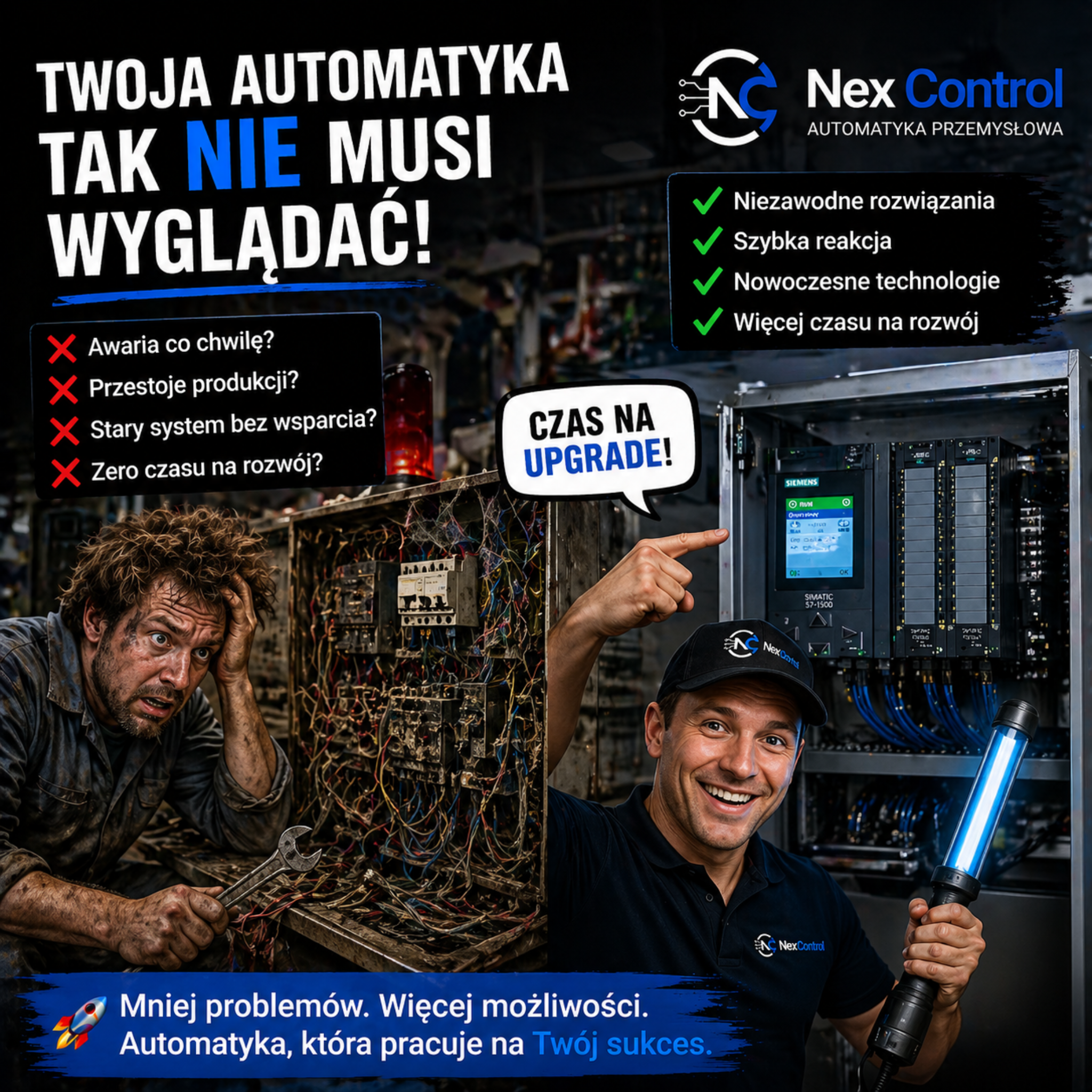
Why do companies postpone automation modernization?
The system works, so nobody touches it until it starts limiting production. See when modernization makes sense and how to do it without unnecessary cost We also cover electrical schematics and control cabinets.